Textile & garment manufacturing (portfolio brief)
Textile ERP
Portfolio brief only—no matching `docs/` tree found under D:\Projects for a textile ERP codebase.
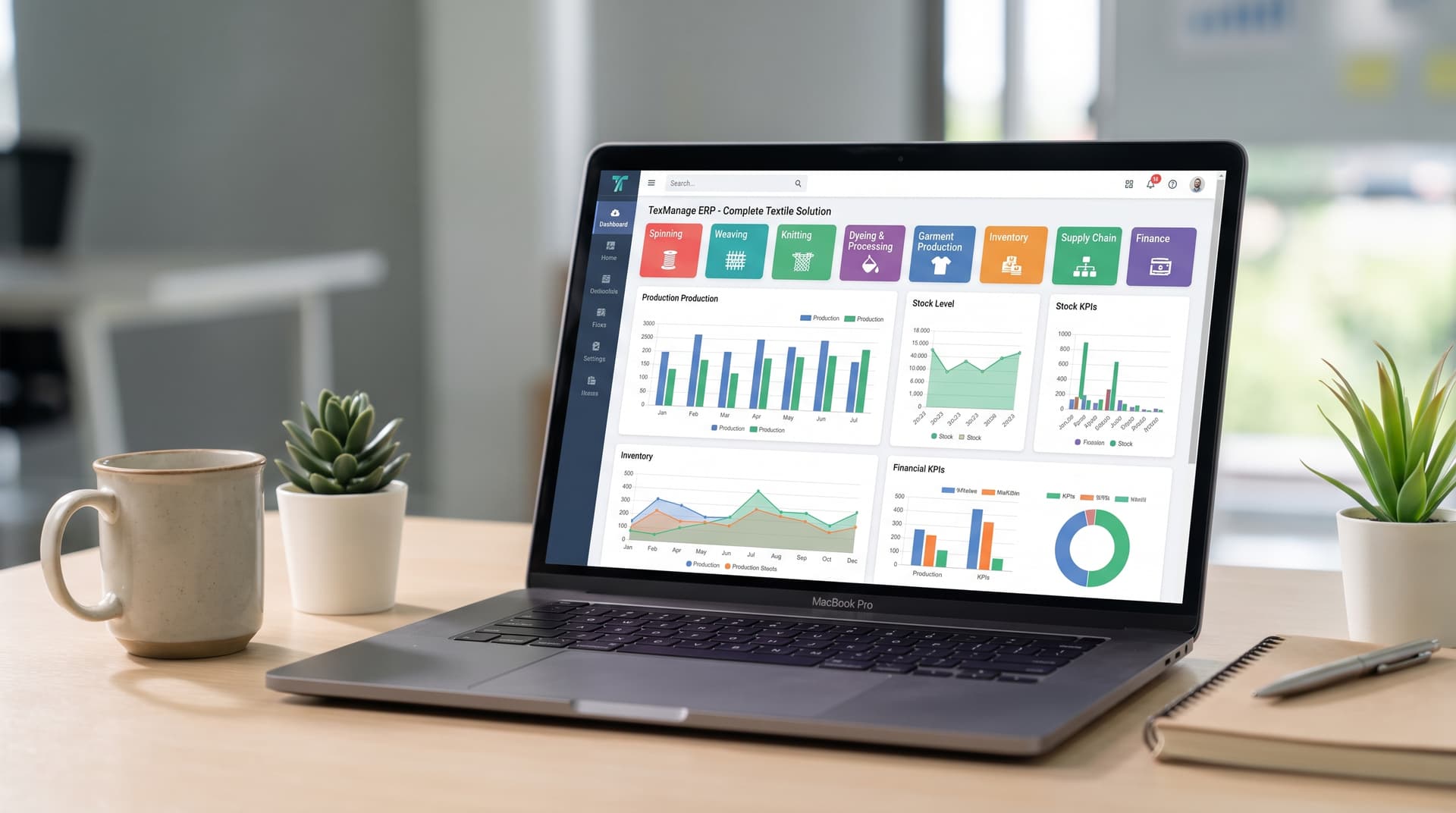
Background & Context
No textile* project documentation set was found under D:\Projects during this rewrite pass, and the documented CV source searched for this batch does not evidence a textile ERP delivery. Prior portfolio copy described spinning/weaving/dyeing/garment modules; that copy is not re-validated here.
Search demand around textile & garment manufacturing (portfolio brief) and Textile ERP keeps rising as operators look for proof—not slide decks—before they hire a build partner.
Tekvers framed Textile ERP as a textile & garment manufacturing (portfolio brief) engagement with clear module boundaries, measurable outcomes, and a stack centered on Not evidenced in project docs (prior marketing stack listed React, .NET Core, SQL Server, Flutter, Power BI).
Delivery covered erp digital transformation, with SEO-ready surfaces and internal linking so the public story reinforces the product work.
This case study page targets buyers researching textile & garment manufacturing (portfolio brief) architecture, vendor evaluation, and implementation risk—paired with related Tekvers blogs and guides on the same niche.
The Challenge
Insufficient repository documentation to write an evidence-based deep case study. Without a coherent textile & garment manufacturing (portfolio brief) foundation, Textile ERP stakeholders faced fragmented tools, slow handoffs, and limited visibility—classic failure modes Tekvers designs against.
The Solution
Textile ERP: Portfolio brief only—no matching docs/ tree found under D:\Projects for a textile ERP codebase. Prevents over-claiming textile ERP capabilities without docs. Tekvers delivered a maintainable textile & garment manufacturing (portfolio brief) system for Textile ERP using Not evidenced in project docs (prior marketing stack listed React, .NET Core, SQL Server, Flutter, with phased rollout, operator workflows, and documentation suited to long-term ownership.
Our Approach
Evidence gate
Only ship deep Tekvers case studies from project `docs/` + source audits.
Brief placeholder
Keep SEO shell; avoid inventing module lists, stacks, or outcomes.
Next step
When a textile ERP docs folder exists, replace this brief with a full Context→SEO rewrite.
What We Delivered
- Metadata-preserving brief entry only
- Explicit “insufficient evidence” note for stakeholders
Outcomes & Impact
- Prevents over-claiming textile ERP capabilities without docs
- Preserves URL/slug continuity on tekvers.com projects
Portfolio integrity: Textile ERP stays listed but is flagged as brief-only until evidence lands.
Technology Stack
Services Delivered
Related Case Studies
Guides & articles from this niche
Planning a similar platform? Share your scope and we will map architecture, delivery phases, and a realistic timeline.